
Exploring Carbon Credits: A Path to a Low-Carbon Future
In a time where climate change represents the foremost threats to humanity, forward-thinking solutions to lower greenhouse gas emissions have become urgent. Among these solutions, carbon credits have become a key tool in the effort against global warming. But what fundamentally are carbon credits, how do they operate, and why are they essential for creating a sustainable future? This article investigates thoroughly into the framework of carbon credits, analyzing their operations, benefits, hurdles, and their role in shaping a greener planet.
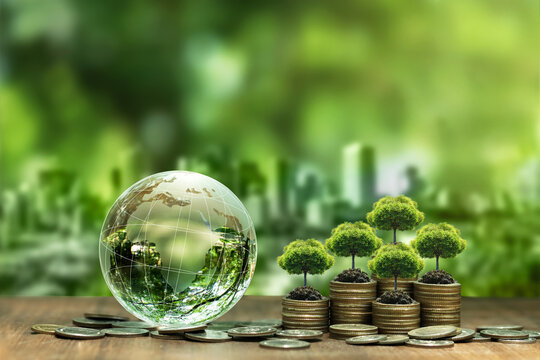
What Are Carbon Credits?
At its foundation, a carbon credit is a tradable document representing the right to emit one metric ton of carbon dioxide (CO2) or its equivalent in various greenhouse gases (GHGs), such as other GHGs. Carbon credits are a cornerstone of carbon markets, which are created to encourage organizations to cut their carbon emissions.
The system operates on a basic principle: those who emit less than their allocated amount of GHGs can trade their extra credits to parties that go beyond their emissions limits. This creates a financial reward for reducing emissions while allowing flexibility for sectors that face hurdles in mitigating their emissions immediately. Carbon credits are typically issued under formal frameworks like the UN mechanisms or non-mandatory schemes like the Gold Standard.
How Do Carbon Credits Work?
Carbon credits work within two primary markets: official markets and non-regulated markets.
Compliance Markets
Compliance markets are governed by international agreements. For instance, under the European Union’s Emissions Trading System (EU ETS), businesses in high-emission sectors (such as cement) are given a cap on their GHG emissions. If a firm emits less than its cap, it can exchange its remaining credits to different organization that has gone over its limit. This system maintains that overall emissions stay within a set limit while promoting development in low-carbon technologies.
Non-Regulated Markets
Voluntary carbon markets permit individuals to invest in carbon credits to neutralize their emissions willingly. For example, a company might invest in credits to neutralize the emissions from its supply chain. These credits often fund efforts like methane capture in developing countries.
The mechanism of producing carbon credits typically involves a project that mitigates emissions. For instance, a forest preservation project that eliminates landfill emissions can create credits. These projects are thoroughly assessed by certified organizations to guarantee their climate impact before credits are issued.

The Value of Carbon Credits
Carbon credits bring a variety of ecological, commercial, and social merits, making them a versatile tool in the struggle against climate change.
Green Impact
By incentivizing emission decreases, carbon credits add substantially to combating climate change. Efforts funded by carbon credits, such as methane capture, also aid preserving ecosystems, promoting biodiversity, and refining air quality. For example, preserving forests not only stores CO2 but also preserves habitats for endangered species.
Market Opportunities
Carbon markets generate financial benefits for innovation. Firms that invest in sustainable technologies can earn by exchanging their surplus credits, while those funding carbon reduction projects typically boost regional economies. In emerging countries, carbon credit efforts can create employment and resources, such as solar power.
Versatility and Reach
Carbon credits facilitate companies to pivot to eco-friendly models at their own rate. Areas with substantial emissions, such as steel, can neutralize their output while working toward long-term emission reductions. Additionally, carbon markets are adaptable, supporting international participation and driving global partnerships on climate targets.

Hurdles and Concerns
Despite their benefits, carbon credits are not without challenges. Analysts argue that the approach has weaknesses that can compromise its effectiveness.
Credibility and Verification
One key challenge is “additionality”—whether a initiative funded by carbon credits would have taken place without support without the economic benefit. For instance, if a wind farm was previously planned, crediting it for emissions reductions may not deliver genuine carbon benefits. Rigorous verification methods are critical to confirm that programs provide authentic, trackable reductions.
Risk of Deceptive Practices
Some firms use carbon credits as a method to look green aware without adopting real shifts to their systems. This practice, known as false sustainability, can undermine consumer trust in carbon markets. To combat this, clarity and accountability are essential, with defined criteria for what qualifies as a reliable carbon credit.
Price Instability
The market rate of carbon credits can fluctuate based on economic conditions. In some situations, minimal prices may weaken the incentive for companies to commit in emission reductions. Creating stable and steady market structures is essential for the future viability of carbon markets.
The Outlook of Carbon Credits
As the globe races to reach the targets of the UN climate goals, carbon credits are positioned to play an progressively essential function. Countries are expanding compliance markets, with nations like China launching their own cap-and-trade programs. Meanwhile, non-regulated markets are scaling steadily, driven by company promises to zero emissions and market demand for climate-conscious practices.
Innovative breakthroughs are also bolstering the reliability of carbon credits. Blockchain technology, for example, is being applied to establish clear, reliable databases of carbon trades. Furthermore, breakthroughs in direct air capture are opening innovative avenues for creating credits by actively removing CO2 from the climate.
However, for carbon credits to realize their entire promise, key measures are required:
- Worldwide Protocols: Unifying regulations and validation approaches across nations will guarantee consistency in carbon markets.
- Scaled-up Support: Increasing funding for high-impact initiatives, especially in at-risk regions, will maximize sustainability and developmental outcomes.
- Community Education: Raising awareness among consumers about the value of carbon credits can drive participation and inspire more extensive collaboration.
Summary
Carbon credits offer a realistic and flexible approach to addressing climate change. By integrating financial benefits with environmental objectives, they inspire businesses to make significant change. While issues like verification and deceptive practices must be resolved, the promise of carbon credits to fuel progress, preserve ecosystems, and encourage global cooperation is evident.
As we move toward a eco-friendly future, carbon credits will undoubtedly continue to be a cornerstone of climate efforts. Whether supporting a reforestation project in the Global South or backing a clean energy system in Asia, every carbon credit invested in is a move toward a more sustainable environment. By adopting this system and addressing its limitations, we can foster a future where economic development and sustainability stewardship go hand in hand.
Có thể bạn quan tâm
Két Đựng Tiền – Giải pháp bảo vệ tài sản an toàn cho mọi doanh nghiệp
Bạn có đang lo lắng về việc bảo quản tiền mặt an toàn trong cửa...
Chiến thuật trung bình giá trong forex
Chiến thuật trung bình giá là gì? Chiến thuật Trung bình giá là chiến thuật vô cùng cổ điển...
PDT Education trung tâm đào tạo tiếng Đức uy tín tư vấn du học Đức hơn 10 năm kinh nghiệm
PDT trung tâm đào tạo tiếng Đức đáng tin cậy định hướng du học Đức...
From Disgusting Grates to Showroom Shine in Minutes: My GrillFighter Experience
grill fighter As autumn rolls in, there’s nothing better than enjoying an outdoor feast with...
PDT Education trung tâm đào tạo tiếng Đức uy tín tư vấn du học Đức trên mười năm kinh nghiệm
PDT Education đơn vị đào tạo tiếng Đức uy tín định hướng du học Đức...
GrillFighter Honest Review: The Medieval-Style Tool That Destroyed 10 Years of Baked-On BBQ Gunk
grill fighter When the grilling season is in full swing, there’s nothing better than firing...
GrillFighter Hands-On Test: The Bristle-Free, Steam-Powered Beast That Changed My BBQ Game
grill fighter With football tailgates and holiday cookouts approaching, there’s nothing better than hosting a...
sh160i trả góp
sh160i trả góp – Giá sh160i trả góp – Mua sh160i trả góp – Trả...